

The Healthcare Software Development Company Hospitals Trust
We design, build, and integrate HIPAA-compliant clinical software for hospitals, health systems, and health-tech startups. Our work includes remote patient monitoring, EMR-integrated workflows, and patient-facing applications.
Trusted in production by
















Healthcare software fails for predictable reasons. It ignores clinical workflow, it treats compliance as an afterthought, and it cannot exchange data with the systems around it. We build for the environments where those mistakes cost the most. These include cardiology programs at Mass General Brigham, remote patient monitoring startups, and research groups at academic medical centers. This page explains what we build, how we handle PHI, and how our work performs in production.
What We Build
Custom healthcare software development for clinical care, hospital operations, and research.
Remote Patient Monitoring
Platforms that receive readings from blood pressure cuffs, glucose meters, and other connected devices. Clinical algorithms process the readings and route each patient to the correct care team, at population scale.
Clinical Documentation
Structured documentation tools that replace paper forms and free-text notes. Incident tracking, standardized assessments, and shift-to-shift continuity that satisfy an audit.
EMR-Integrated Workflows
Software that operates inside the clinical workflow, not in a separate window. It reads from and writes to Epic and other EMR systems over HL7 v2 and FHIR, so staff do not enter data twice.
Patient-Facing Applications
Web and mobile applications that patients use: symptom tracking, lab-value dashboards, and care-partner sharing. Built accessible and safe for PHI.
Clinical Data Platforms
Registries, quality dashboards, and analytics pipelines. They turn scattered clinical data into defensible numbers for care teams, executives, and payers.
Bioinformatics & Research Tooling
Data capture, cohort management, and analysis tools for grant-funded research. This is medical software development done within IRB, consent, and de-identification constraints.
HIPAA-Compliant Software Development, In Practice
Every person on our staff holds a current HIPAA certification. The certificate is only the start. What matters is how compliance appears in the systems we ship.
Business Associate Agreements
We sign a BAA as standard practice. We also map BAA coverage across your full stack (hosting, messaging, monitoring), so every subprocessor is covered.
PHI Handling
We design for minimum-necessary access. We segregate PHI, de-identify it where the use case permits, and keep it out of development environments, logs, and analytics tools.
Audit Logging
The system records who saw which record, when, and from where. The records are queryable, because the first question after an incident is about the audit trail.
Access Control
Role-based permissions that follow real clinical roles: attending, care navigator, front desk. Each role gets the correct MFA and session controls.
Encryption Everywhere
TLS for data in transit, encryption for data at rest, and managed keys. We use HIPAA-eligible cloud services, and we configure them correctly.
Breach Protocols
We document the incident response before go-live: detection, containment, notification timelines, and the evidence trail your compliance officer will request.
Integration & Interoperability
Most healthcare software projects succeed or fail here. If your system cannot exchange data with the EMR, the laboratory, and the devices around it, it is not complete.
Many development companies treat interoperability as a line item. We treat it as the most difficult and most valuable part of the work. Our team has production experience with HL7 v2 interfaces, FHIR APIs, and the interface engines that move clinical messages between systems. That includes Mirth Connect and its open-source successor, Open Integration Engine.
We migrate production Mirth Connect deployments to Open Integration Engine today. If the Mirth license change affects your interface engine, see our Mirth-to-OIE migration service and the technical migration guide. For older clinical systems in general, our legacy system modernization practice covers the full path from assessment to cutover.
HL7 v2 interfaces
ADT, ORU, SIU, and ORM feeds. We build, monitor, and maintain them.
FHIR APIs
Modern RESTful exchange for EMR data, patient access, and device readings.
EMR / EHR integration
Epic and other major systems, in production.
Interface engines
Mirth Connect and Open Integration Engine: channels, transformers, migrations.
Device & API integration
Medical device data feeds, laboratory systems, and third-party health APIs.
Proof
Three Systems in Production
Every number below is published and traceable.
CardioCompass — Mass General Brigham
An algorithm-driven platform for Brigham and Women's Hospital. It manages hypertension and cholesterol remotely, and it replaces routine office visits with continuous, data-driven care. The outcomes are published in JAMA Cardiology and Circulation.
- 10,000+ patients enrolled and managed remotely
- 424,000+ blood pressure readings processed and analyzed
- 4X better outcomes than traditional care models
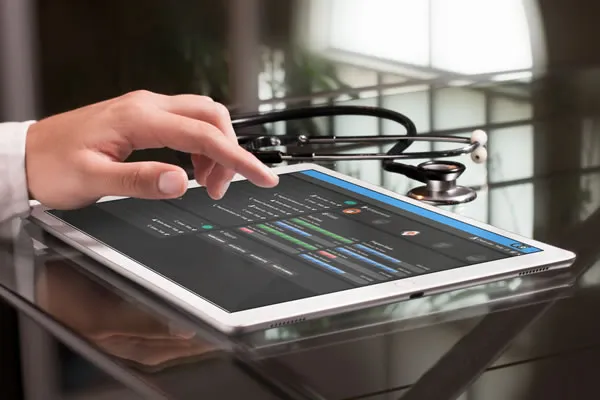


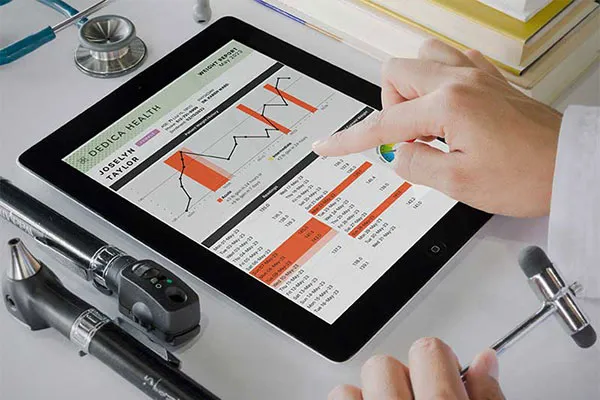
Dedica Health
A remote patient monitoring platform. It integrates medical devices, automates care workflows, and gives care navigators real-time insight. We took Dedica from a startup concept to a scalable production platform.
- 70%+ of hypertension patients actively engaged in their care
- 555% growth in Medicare adoption on the platform
- Multi-device API integration with real-time processing


Welle Training
An EMR-integrated clinical documentation platform. It standardizes behavioral incident tracking and de-escalation reporting with Welle's Red Scale methodology, in one of the least documented risk areas in healthcare.
- Epic integration over FHIR for in-workflow documentation
- Standardized Red Scale assessments across shifts and teams
- Incident analytics for staff-safety programs



How We Work
Buyers ask the same first question: will the project stay on budget? Our process makes the answer visible at each step.
Discovery First
Each engagement starts with a fixed-scope discovery phase. We map the workflows, the integrations, and the compliance constraints, and we produce a concrete estimate. You know the budget before you commit to a build.
Sprint Delivery
We work in an agile/Scrum cadence with test-driven development and continuous integration. You see working software at each sprint, so problems surface in days, not months.
Flexible Engagement
We offer project-based builds, an embedded team that works with your engineers, or a healthcare software consultant for architecture and compliance questions. The engagement is sized to the problem.
Senior, US-Based
The people who scope your project also build it. You work with named engineers in the United States, with direct communication and no offshore handoff.
Frequently Asked Questions
The questions healthcare buyers ask us, with the same answers we give on calls.
Yes. Every member of our team holds a current HIPAA certification, not only the engineers on healthcare projects. We build PHI handling, audit logging, access control, and encryption into the architecture from the first sprint. We do not add them as an afterthought before launch.
In most cases, yes. We build EMR-integrated software with HL7 v2 interfaces, FHIR APIs, and interface engines such as Mirth Connect and Open Integration Engine. This includes Epic-integrated systems that run in production today. The full answer depends on what your EMR exposes. We verify that at the start of discovery.
Yes. A Business Associate Agreement is standard paperwork for any engagement that touches PHI. We also review the BAA coverage of every subprocessor in your architecture (cloud hosting, messaging, analytics), so the chain of responsibility has no gaps.
The honest answer: it varies too much for one number to be useful. Focused integration or assessment work takes weeks. A production clinical platform is a multi-month build. Every project starts with a fixed-scope discovery phase that produces a concrete estimate and delivery plan. You know the budget before you commit to a build, and you see working software at each sprint.
Yes, often. CurieDx and Dedica Health both came to us as early-stage companies, and both now operate production platforms. We phase the scope to fit seed-stage budgets, and we tell you plainly which parts of your roadmap can wait. If you are new to healthcare software, start with our guide to getting started building healthcare software.
You do. The source code, the infrastructure, and the documentation are your property, in your repositories and your cloud accounts where possible. If the engagement ends, you keep everything. We hand over what another team, or your own, needs to continue the work.
In the United States. We are headquartered in Rhode Island and work with hospitals and startups across the country. The senior engineers you meet during scoping are the people who build your system. There is no offshore handoff.
Yes. We often inherit systems that other teams built, including older platforms that hold PHI. See legacy system modernization for how we assess, de-risk, and migrate clinical systems without disruption to care.
What Our Healthcare Clients Say
From hospital innovation directors to health-tech founders, in their words.



Ana Mercurio-Pinto
Director of CV Innovation, BWH
"Blackburn Labs introduced us to several industry best practices, including agile/Scrum methodologies, test-driven development (TDD), behavior-driven development (BDD), and continuous integration (CI). They were very professional and often went above and beyond the scope of work."



Menachem Wakslack, MD
Founder & CEO, Dedica Health
"The quality of Blackburn Labs' oversight is impressive. They review and test the solution multiple times before releasing it. They're deliberate in rolling things out, and their processes are very smooth and professional. In addition, Blackburn Labs' team is creative and understands what I need — they help me find the best ways to develop our solution. They don't just follow my instructions; they spend a lot of time knowing our company's needs."



Therese Canares, MD
CEO & Founder, CurieDx
"Blackburn Labs has an admirable combination of big-picture strategic thinking and uncanny attention to detail. Working with Rob Blackburn and his team is an incredible experience. They are fully transparent with the process, attentive to detail, great partners."



Joseph Dziobek
Executive Director, PRCRI
"We love the flexibility of Blackburn Labs' knowledge base. They've done other health care projects across the country, so they understood our objective right away when we contacted them. Money has never been the focus of our partnership; Blackburn Labs is interested in executing our project for its merit. Their team focuses on delivering solutions, not ensuring clients fit into their work framework"



Matt Westcott
COO, Athens Orthopedic Clinic
"Feedback Summary: Blackburn Labs built exactly what the client wanted. The team also trained the internal team how to use the guides... They were generally responsive and addressed feedback in a timely manner."
Getting Started
Ready to build healthcare software that performs in the clinic?
Tell us what you want to build, or what is broken. We bring an engineer to the first call. We ask the questions your EMR team will ask later. Then we give you a clear assessment of scope and budget.